
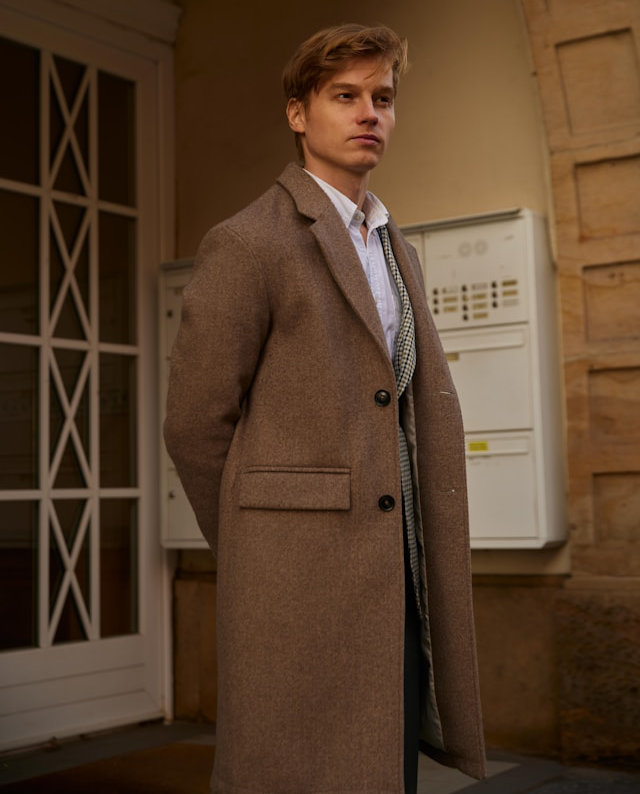
I’ll be honest – I recently found myself needing an overcoat for a funeral, and it reminded me how tricky it can be to find the right one when you actually need it. After opening and closing countless of online shops because I didn’t want to subject myself to the crowded shopping experience on a weekend, I realized I’d been putting off this wardrobe essential for far too long. An overcoat isn’t something you want to rush, so let’s walk through everything you need to know to find one that’ll serve you well for years.
Why Every Man Needs a Proper Overcoat
An overcoat is your armor against European winters. Unlike a casual parka or a wool jacket, a proper overcoat works with everything from jeans to a suit. It’s the piece that makes you look put-together when the temperature drops, whether you’re heading to the office, a formal event, or just meeting friends for dinner.
However, the investment can be real. Expect to spend anywhere from €300 to over €1,000. But a good overcoat can easily last a decade or more. That’s exceptional value when you break it down per wear.
Understanding Fabrics: What You’re Actually Paying For
Pure Wool
This is your workhorse fabric and the sweet spot for most guys. A 100% wool overcoat in a decent weight (think 500-650 grams per meter) will keep you warm in most European weather without breaking the bank.
Pros:
- Excellent warmth-to-weight ratio
- Naturally water-resistant
- Durable and ages well
- Most affordable option for quality
- Easy to care for
Cons:
- Can feel scratchy against skin (wear a scarf)
- Heavier than blends
- Pills more easily than higher-end options
Price range: €300-600
Wool-Cashmere Blends
Usually 80-90% wool with 10-20% cashmere, these blends give you that luxury feel without the full luxury price tag. This is where I’d recommend most guys land if they can stretch the budget.
Pros:
- Softer than pure wool
- Still durable enough for daily wear
- That premium feel at a more accessible price
- Less pilling than pure cashmere
Cons:
- More expensive than pure wool
- Requires more careful maintenance
- Can still pill, just less so
Price range: €400-900
Pure Cashmere
The dream fabric, but be realistic about whether you need it. Yes, it’s incredibly soft and lightweight while staying warm. But it’s also delicate, pills easily, and requires professional dry cleaning.
Pros:
- Unmatched softness and luxury
- Incredibly warm for its weight
- Beautiful drape
Cons:
- Expensive
- Pills and shows wear quickly
- Requires kid gloves care
- Overkill for most guys’ needs
Price range: €800-2,000+
Wool Blends (with synthetic fibers)
Common in budget offerings, usually mixing wool with polyester or nylon. Not inherently bad, but know what you’re getting.
Pros:
- More affordable
- More wrinkle-resistant
- Often water-resistant
- Lower maintenance
Cons:
- Less breathable
- Won’t age as gracefully
- Can feel less substantial
- Doesn’t develop character over time
Price range: €300-400
Tweed
Technically still wool, but worth its own mention. Tweed overcoats are textured, traditionally from Scotland or Ireland, and wonderfully rugged.
Pros:
- Extremely durable
- Distinctive texture and character
- Wind-resistant
- Perfect for casual wear
Cons:
- Too informal for very formal occasions
- Heavier and bulkier
- More limited styling options
- Can look dated if not styled carefully
Price range: €400-800
My recommendation: If you’re buying your first overcoat, go for 100% wool or a wool-cashmere blend. Pure cashmere is lovely but unnecessary. A wool blend with synthetic fibers can work if you’re on a budget. Save tweed for a second overcoat when you want something with more character.
What Colors to Consider
Navy
Navy is the most versatile color you can buy. It works with grey, brown, and black trousers. It’s formal enough for suits but casual enough for jeans. If you’re only buying one overcoat in your life, make it navy.
Best for: First overcoat, maximum versatility, formal and casual settings
Charcoal Grey
Just slightly more formal than navy, charcoal grey is elegant without being stark. It’s particularly good if you wear a lot of black or grey already.
Best for: Urban environments, modern style, easy to keep clean-looking
Dark Brown
A dark brown overcoat – think chocolate or espresso rather than tan – is surprisingly versatile and warmer in tone than navy or grey. It pairs beautifully with navy, grey, and olive trousers, and has a refined, Continental feel that works equally well in the city or countryside.
Best for: Second overcoat, adding warmth to your wardrobe, pairing with earth tones
Camel
A camel overcoat is classic and undeniably stylish, but it’s harder to wear. It shows dirt more easily and doesn’t work with all trouser colors. This is your second overcoat.
Best for: Weekend wear, making an impression, more developed personal style
Black (Proceed with Caution)
Black can look severe and shows every piece of lint. It’s formal but often feels too formal. Unless you specifically need it for evening wear or it fits your personal style, skip it.
Best for: Very formal occasions, minimal aesthetic, evening wear
Getting the Fit Right
This is where most guys get it wrong. An overcoat needs to fit differently than a suit jacket, and understanding these differences will save you from looking like you borrowed your dad’s coat.
Shoulders
The shoulder seam should sit right at the edge of your natural shoulder – not drooping down your arm, not pulling across your back. This is non-negotiable. If the shoulders don’t fit, nothing else matters because you can’t alter them without essentially rebuilding the coat.
When trying it on, wear a suit jacket or thick sweater underneath. You need room to layer, but the shoulders should still look natural. If they’re bunching or pulling when you’re wearing layers, size up.
Length
The classic overcoat length is mid-thigh, roughly covering three-quarters of your thigh.
Too short (ending at your hip or upper thigh) makes you look like you’re wearing a boy’s coat. Too long (past your knee) can look dated or costume-like unless you’re deliberately going for a specific vintage aesthetic.
Here’s the test: stand naturally and let your arms hang by your sides. The coat should end somewhere between where your fingertips fall and your knee. That’s your range.
Shorter guys: Aim for just above the knee. Going longer can overwhelm your frame.
Taller guys: You can go slightly longer if you want to, to just below the knee, but be careful it doesn’t look like a bathrobe.
Chest and Body
Button the coat and move around. Raise your arms, sit down, twist your torso. The coat should move with you without pulling or gaping at the button.
You should be able to comfortably fit a closed fist between the buttoned coat and your chest. More than that and you’re swimming in it; less and you’ll look squeezed in.
When the coat is buttoned, there shouldn’t be an X-shaped pulling at the buttons. That’s a clear sign it’s too tight.
Sleeves
Your coat sleeves should end right where your wrist meets your hand – the same spot as a suit jacket, or maybe a touch longer. When your arms hang naturally, you should see a bit of shirt cuff showing.
Too long and you look sloppy. Too short and you look like you’ve outgrown it. Luckily, sleeve length is one of the easier alterations a tailor can make.
Collar and Lapels
The collar should sit flush against the back of your neck without gaping. If there’s a visible gap between the collar and your shirt collar, the coat is too big in the shoulders or body.
The lapels should lay flat against your chest. If they’re buckling or standing away from your body, something’s off with the fit.
Silhouette
Step back from the mirror. The coat should follow your natural body line without being tight. You’re looking for structure, not skinny.
Modern overcoats tend to be more fitted than vintage styles, but don’t confuse fitted with tight. You should have a clean line from shoulder to hem, with a slight taper if any. Avoid anything that flares dramatically at the bottom, that’s outdated.
Movement Test
Before you buy, do these checks:
- Button the coat and sit down. Can you do it comfortably? Does the coat ride up excessively?
- Raise your arms in front of you like you’re driving. Do the sleeves pull back too much?
- Reach across your body like you’re grabbing a railing. Does the back pull uncomfortably?
- Walk naturally. Does the coat swing with you or feel restrictive?
If any of these movements feel constrained, you need a different size or a different coat entirely.
Single-Breasted vs. Double-Breasted Fit
Single-breasted coats are more forgiving and versatile. They’re easier to fit and work better if you fluctuate in weight. This is what most guys should buy first and it’s my personal favorite.
Double-breasted coats need to fit more precisely because the buttoning creates a specific silhouette. The buttons should never pull or gape. Double-breasted styles also tend to add visual bulk, so they work better on taller or broader guys.
When to Size Up/Down
If you’re between sizes, here’s when to size up:
- You live somewhere very cold and will layer heavy knits underneath
- You have broad shoulders or an athletic build
- The larger size fits in the shoulders and you can tailor the body
Here’s when to size down:
- You prefer a more fitted, modern look
- You’ll mainly wear it over shirts or thin sweaters
- The smaller size fits everywhere except is slightly snug (you can alter out, not in)
The Tailor Is Your Friend
Even expensive overcoats often need minor adjustments. Budget €50-100 for alterations when you buy. A good tailor can:
- Shorten sleeves
- Take in the body
- Adjust the length
What they can’t easily fix:
- Shoulders (too expensive, not worth it)
- Dramatic length changes (affects proportions)
- Fundamental style changes
Where to Buy
Here are a few brands I would check out first:
- Charles Tyrwhitt (€€)
- Gloverall (€€)
- Oscar Jacobson (€€)
- Reiss (€€)
- SIR of Sweden (€€)
- Suitsupply (€€)
For a variety of other reputable shops and brands check out the brand directory.
A Word on Thrifting
Vintage and secondhand shops can be goldmines for quality overcoats, especially if you’re looking for brands that were built to last decades ago. You’ll often find wool overcoats from premium makers at a fraction of their original price. However, thrifting requires more careful inspection than buying new. Check thoroughly for:
- Moth holes (especially under the collar and along seams)
- Worn or damaged linings
- Missing buttons (replaceable, but factor in the cost)
- Stubborn odors
- Stains that might not come out
- Whether the shoulders actually fit (remember, you can’t alter these)
If the coat is in good condition and fits well in the shoulders, it’s worth considering even if it needs minor repairs. A 30€ hem adjustment on a 50€ vintage coat is still brilliant value if the quality is there.
When to Buy
Shop sales in January/February or July/August. You’ll save 30-50% on last season’s stock, which is identical to current season for classic styles. A navy wool overcoat doesn’t go out of style just because it’s from last year’s collection.
What to Look For When You’re Actually Shopping
Construction
Look inside. Full or half canvas construction is better than fused (glued), but you’ll mainly find this at premium prices. Check the lining. Acetate or viscose is fine, but avoid cheap polyester that’ll tear easily.
Functional buttons and good buttonholes indicate quality. Check pocket construction too – they should feel reinforced, not flimsy.
Details
Avoid trendy details like excessive buttons, unusual collars, or loud linings. You want this coat to still look good in a decade. Subtle details – a nice notch lapel, horn buttons, a ticket pocket – add interest without dating the piece.
Final Thoughts
My funeral shopping panic taught me something important: don’t wait until you need an overcoat to buy one.
For most guys, I’d recommend spending €400-700 on a navy or charcoal wool or wool-cashmere blend. That’s the sweet spot where quality meets value.
But here’s the thing, a €400 pure wool coat that fits you perfectly is infinitely better than a €1,500 designer piece that doesn’t. Fit trumps fabric, fabric trumps brand name. Buy the best you can afford, make sure it actually fits, and take care of it properly. It’ll take care to you through countless European winters.
Now go find your overcoat before you actually need it. Your future self will thank you.
