
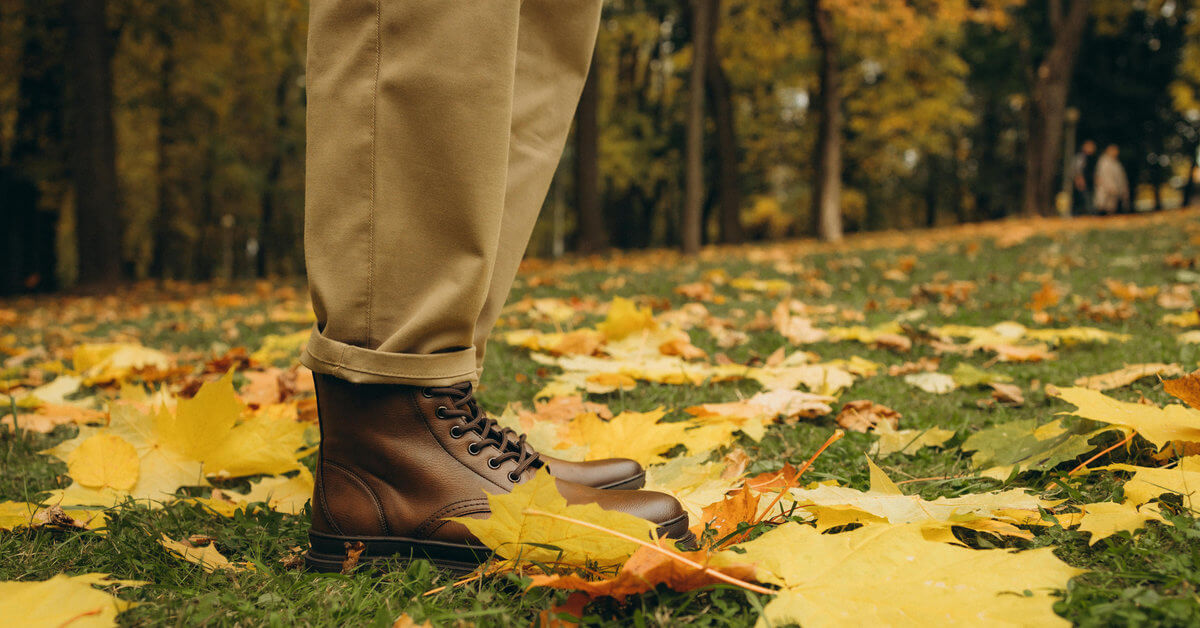
I’ve been shopping for a couple of new chinos for the office, and rather than trust the usual roundups I went through the specs, prices, and fabric labels myself. What follows is my shortlist, from a €40 pair I’d wear without a second thought up to one around €170, with a couple I’d tell you to skip along the way.
One note on price. These are full-price figures as of mid-2026. Chinos get discounted constantly, so read them as the top of what you’d pay, not the number on the receipt.
A quick word on fabric and weight
I’ve covered how chinos should fit in its own piece, so I’ll keep the fit and sizing talk out of this one. Two other things decide how a pair performs, and they’re quick.
Fabric: the classic chino is cotton twill, usually with 2 to 3 percent elastane for give. The exception worth flagging is performance cloth like lululemon’s Warpstreme, which is basically synthetic. It stretches and resists wrinkles, but it has a faint sheen and won’t breathe like cotton.
Weight is measured in grams per square meter and matters more than people expect. As a rough map: 170 to 240gsm is summer-light, 250 to 300gsm is the all-year middle, and 300 to 450gsm is proper winter cloth. Nearly everything below lives in that middle band. Only ISTO, at 300gsm, leans cold-weather.
Under €50
Uniqlo Slim Chino
€39.90, 97% cotton with 3% elastane, and the pair that nearly ended my search before it started. Clean tapered leg, reinforced pockets, tidy stitching, none of which you expect at forty euros. It’s made in Bangladesh, India, and Vietnam, and the thinner cloth won’t see out a decade, but at this price you could replace it twice and still be ahead.
The slim cut is genuinely slim. Size up if you’re between sizes or carry any thigh.
€50–100
Massimo Dutti
If you want a step up from Uniqlo without leaving the high street, Massimo Dutti is it. Around €80, usually 97% cotton with 3% elastane, a clean mid-rise, and it wears dearer than it costs. It won’t excite anyone, but you can try it on in town and walk out sorted.
Charles Tyrwhitt Ultimate Non-Iron Chinos
If you iron trousers under protest, these are aimed at you. 97% cotton with 3% elastane and a non-iron, stain-resistant finish that survives a work week. Under €100 full price, and Tyrwhitt discounts so often that paying full feels like an error.
My one hesitation is firsthand. I tried a pair in June 2025 and the leg flared at the ankle in a way that put me off. They come in Classic, Slim, and Extra Slim, and Tyrwhitt says it has since reworked the cut, so mine may have been the older version. I can’t promise the flare is gone, so try a pair on before you commit rather than taking my word either way. One more thing: the non-iron effect is a chemical finish rather than the weave, if you’d rather keep your cotton untreated.
Asphalte The Heavy Chinos
French, direct-to-consumer, and the best-made pair in this bracket if you can wait for it. 97% organic cotton with 3% elastane, a 260gsm twill woven in Italy and cut in Portugal, semi-slim with room through the hip. The name oversells the weight, though. At 260gsm this is an all-year midweight, not a winter fabric, so it holds up through spring and summer just fine. Asphalte builds these to resist the fading and sagging that finishes off cheaper chinos after a few washes.
Asphalte only sells in preorder waves, so you pay €99 up front, about €139 once a wave restocks, and wait a few weeks for delivery either way. You won’t have them by Saturday, but they’re worth it.
€100–200
Suitsupply chinos
This is the one I keep coming back to for the office. The core cotton chino is €119, a pure-cotton mid-weight twill from the Di Sondrio mill in Italy, cut mid-rise and straight. What tips it over the line for me is the shops: you can walk in almost anywhere in Europe, try it on, and have it altered in-house, and for trousers that matters more than nearly anything on a spec sheet.
The care label does say dry clean only, which is a bit precious for a cotton trouser, and most people cold-wash and hang-dry them anyway. If you want something less plain, there are pleated and wide-leg cuts too.
lululemon ABC Trouser
If your day is all sitting, cycling, or travel, lululemon’s ABC trouser is hard to beat for comfort. The stretch is the best here and the trousers hold their shape through hard use, roughly €98 to €148.
Where it gets fiddly is the fabric, because there are several. Warpstreme and the airier WovenAir are technical synthetics: superb stretch, wrinkle-proof, but with that faint sheen and none of cotton’s breathability. For something nearer a real chino, look at the cotton-blend twills, the Stretch Cotton VersaTwill or Smooth Twill, or the sturdier, canvas-like Utilitech for colder months. None are pure cotton, so if that’s a dealbreaker, this isn’t it. Two complaints come up repeatedly: a seam some people feel behind the knee, and sizing that wanders.
Asket The Slim Chino
€170 buys 98% organic cotton with 2% elastane, a 260gsm Italian sateen, Corozo buttons, and a mid-rise tapered cut sewn in Portugal. What you’re really buying is the paper trail. Asket publishes its whole supply chain, mills and cost breakdown included, which almost nobody else bothers to do.
The trouser is very good without being better than things that cost less, and the taper splits people, some wanting more, some less. If traceability genuinely matters to you, it’s an easy buy. Otherwise you’re paying mostly for the ethics, and cheaper pairs here fit just as well.
ISTO Chinos
This is the heavyweight of the group: 100% organic cotton at 300gsm, GOTS certified, Corozo button, tapered, made in Portugal, around €125. That weight buys structure and drape the lighter pairs can’t touch, and it looks better the longer you wear it.
But the weight cuts both ways. It’s too warm for a hot summer, and heavy enough that you’ll want to dry it flat rather than tumble it. Think autumn-to-spring trouser, and a very good one.
One to approach with caution: Boss
You’ll see the Boss Kaito recommended everywhere, and I’d think twice. Not because it falls apart, but because of what hides behind the name. At about €165, “Kaito” covers wildly different cloth. Some versions are a proper 97% cotton. Others are 68% cotton with 29% polyester, and one I turned up was 58% cotton with 38% polyamide. The model name won’t tell you which, only the fabric label will, and paying €160 for a trouser that’s over a third plastic is the exact thing people mean when they say you’re buying the badge.
Boss isn’t making a bad trouser here. Fit and sizing are usually fine, and the pure-cotton version deeply discounted, around €90, is a sensible buy. But at full price, with that much variation tucked behind one name, almost anything else on this list does more with your money.
Spending more: Italian and German make
Two brands earn the stretch if you want the cloth and make to carry the price. Luca Faloni builds its chinos entirely in northern Italy: whipcord cotton with a little elastane for warmer months, a heavier twill for winter, horn buttons, a light taper. Both weights are €160 and it ships across the EU. Hiltl, a German house that makes nothing but trousers, does excellent cotton chinos with an adjustable waistband, roughly €140 to €190, though a handful of models cross €200, so check the exact one you’re eyeing.
Where I’ve landed
If it helps to cut through all of that:
- Tightest budget: Uniqlo at €39.90, sized up if you’ve got thighs.
- Office all-rounder: Suitsupply, because you can try it on and tailor it the same afternoon.
- Best made for the money: Asphalte, if the preorder wait doesn’t put you off.
- Spending more without the guilt: Asket for the paper trail, ISTO for the heavier cloth.
That’s my shortlist. Sort out the two or three pairs that cover your week, get the fit right (the fit guide is there for exactly that), and chinos turn into something you stop thinking about.
You’ll find all of these and more in the Basic and Simple brand directory if you want to keep digging.
